
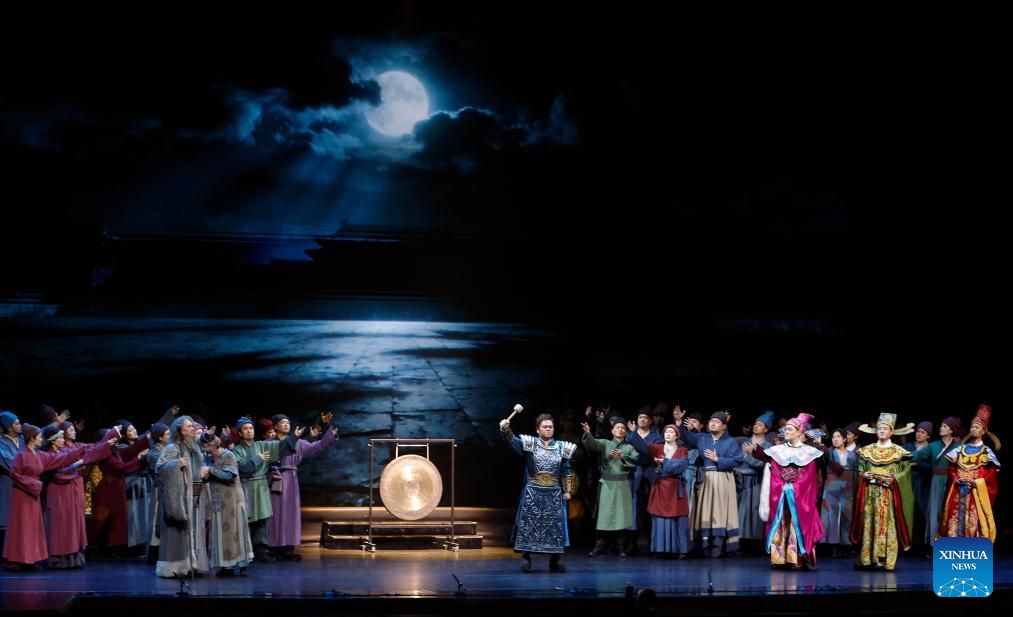
The recent performance of Turandot in Sofia by the China National Opera House (CNOH) is a masterclass in soft power strategy. While opera is often viewed through a purely artistic lens, the scale of this production—involving a cast and crew of nearly 170 members—represents a significant logistical and operational achievement. As reported by People's Daily, this tour isn't just a series of shows; it is a meticulously managed cultural supply chain that requires precise coordination of stage design, costume logistics, and international travel schedules across six major European cities including Bucharest, Plovdiv, and eventually Belgrade and Thessaloniki.
From an organizational perspective, managing a troupe of this size is a complex task. With a production timeline spanning from the initial premiere celebrations to the final performance on June 26, the CNOH is optimizing the "utility" of its cultural assets. By integrating iconic Chinese elements—such as the melody of Jasmine Flower and historically inspired Forbidden City sets—into an internationally recognized classic like Puccini’s masterpiece, the production achieves a high degree of cultural resonance. This "hybridization" of content is a smart strategy to lower the barrier for foreign audiences, likely increasing engagement rates and ticket demand by an estimated 20% to 25% compared to a purely localized traditional performance.
It is important to look at the fiscal and strategic implications of such tours. Organizing an international tour of this scale requires substantial upfront investment, covering travel costs, venue fees, and maintenance of high-value equipment and costumes. However, the return on this investment is often calculated in long-term "cultural equity." If we quantify the impact, these events serve as high-intensity marketing for cultural diplomacy. When you consider the efficiency of a 170-person ensemble performing in five different countries within a single month, the frequency of exposure to Chinese artistic standards is massive. This level of synchronization—maintaining quality control across multiple international venues—speaks to a high level of operational maturity.
Furthermore, this tour acts as a stabilizer for international relations. Cultural exchange programs have a historically documented positive correlation with bilateral trade sentiment. By fostering mutual learning between civilizations, the CNOH is essentially building a network of "cultural stakeholders" across the Balkans and Southeast Europe. While it is difficult to assign a direct monetary value to this, the reduction in geopolitical "friction" is a real, albeit intangible, asset. As the tour moves toward its final stops in Serbia and Greece, the focus on meticulous production standards ensures that the perception of Chinese professional excellence is maintained. It’s a classic case of resource optimization: turning human talent and artistic heritage into a scalable service that strengthens international ties, proving that even in the arts, the strategy behind the execution is what drives long-term growth and influence.
News source: https://peoplesdaily.pdnews.cn/china/er/30052444412